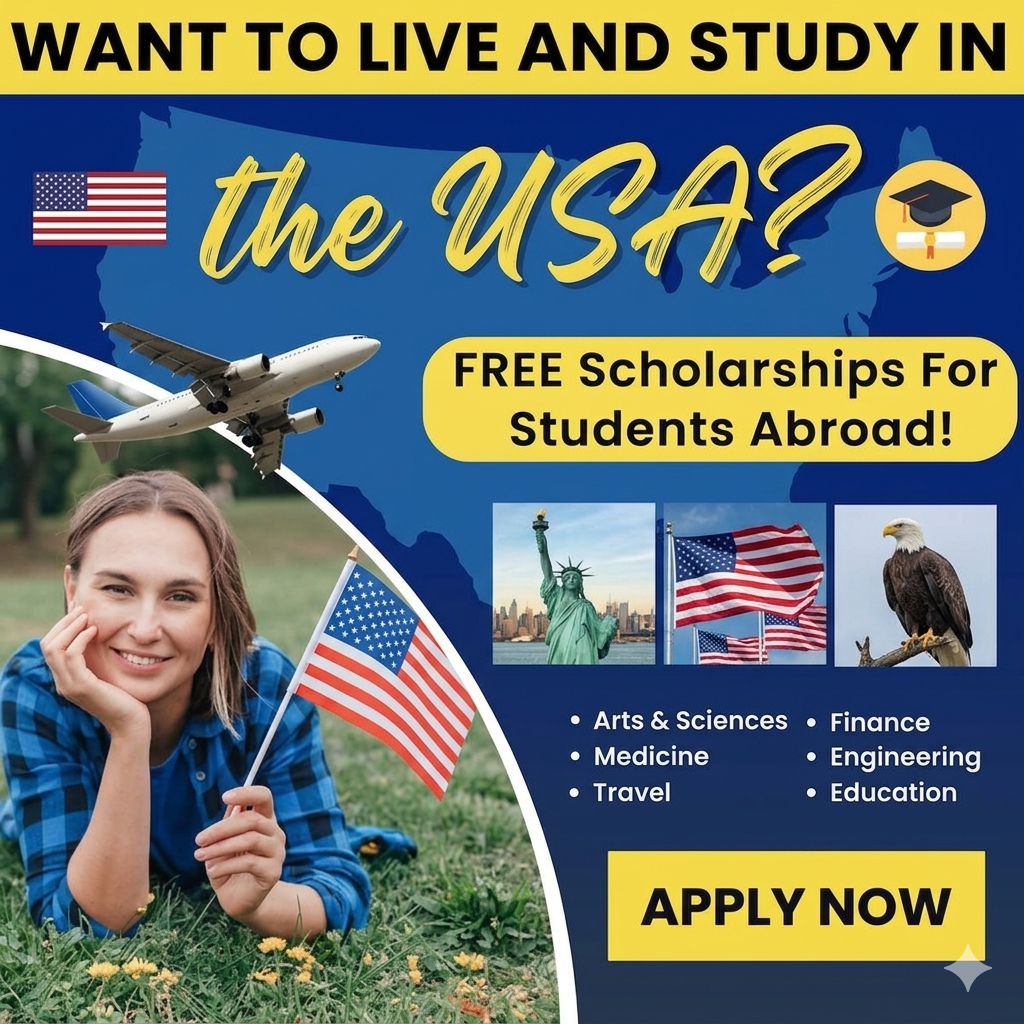
Studying in the United States remains one of the most transformative decisions any ambitious student can make. It opens doors to global careers, international networks, and access to industries that simply don’t exist in many developing countries. For students in places like Nigeria, however, the biggest barrier has always been cost.
Annual tuition and living expenses in the U.S. can easily range from $40,000 to $90,000. That figure alone discourages thousands of talented students from even trying.
But here’s the reality most people overlook: you can study in the USA for free—not through luck, but through fully funded scholarships and structured financial aid programs that eliminate nearly all costs.
Thousands of international students achieve this every year. The difference isn’t intelligence or privilege—it’s strategy, information, and execution.
This comprehensive guide breaks down exactly how to study in the USA for free in 2026, including the best fully funded scholarships, how visa sponsorship works, and the step-by-step strategy to position yourself for success.
Why the USA Remains the #1 Study Destination
The United States continues to dominate global education rankings for a reason. Institutions like Harvard University, Massachusetts Institute of Technology, Stanford University, and Yale University are not just prestigious—they are deeply connected to global industries.
But beyond rankings, the real advantage lies in the system itself:
- Flexible academic programs
- Strong research opportunities
- Direct connection to employers
- Practical, career-driven education
Unlike many countries, the U.S. allows students to combine study with structured work opportunities. Programs like CPT (Curricular Practical Training) and OPT (Optional Practical Training) enable you to gain real-world experience while studying and after graduation.
This makes studying in the U.S. not just an academic decision—but a long-term career strategy.
Understanding the Real Cost of Studying in the USA
Before exploring scholarships, it’s important to understand what you’re avoiding financially.
| Expense Category | Average Annual Cost |
|---|---|
| Tuition Fees | $20,000 – $60,000 |
| Accommodation | $8,000 – $15,000 |
| Living Expenses | $10,000 – $18,000 |
| Health Insurance | $1,000 – $3,000 |
| Miscellaneous | $2,000 – $5,000 |
| Total | $40,000 – $90,000 |
This is why self-funding is unrealistic for most students. Fully funded scholarships remove this burden completely.
What Fully Funded Scholarships Actually Cover
A true fully funded scholarship goes far beyond tuition.
Most top programs include:
- Full tuition fees
- Accommodation or housing allowance
- Monthly stipend ($1,000–$2,500)
- Flight tickets (arrival and return)
- Health insurance
- Books and study materials
Some even provide:
- Relocation support
- Leadership training
- Internship opportunities
Most importantly, these scholarships act as strong financial proof during your visa process.
Top Fully Funded Scholarships in the USA (2026)
Here are some of the most credible and high-value scholarships you should focus on:
1. Fulbright Program
One of the most recognized scholarships globally.
What it covers:
- Full tuition
- Travel costs
- Monthly stipend
- Health insurance
Best for: Master’s and PhD students
Strength: Extremely strong for visa approval
2. Knight-Hennessy Scholars – Stanford University
A highly prestigious graduate scholarship.
What it covers:
- Full tuition
- Living stipend
- Travel allowance
Bonus: Leadership training and global exposure
3. Financial Aid at Harvard University
Harvard’s need-based aid can effectively function as a full scholarship.
What it covers:
- Full tuition
- Accommodation
- Living expenses
Many students assume Harvard is unaffordable—this is often not true with aid.
4. Scholarships at Yale University
Yale offers generous need-based funding.
Coverage:
- Up to $70,000+ per year
- Full or partial funding depending on need
5. Financial Aid at Massachusetts Institute of Technology
Ideal for STEM students.
What it offers:
- Full need-based funding
- Research opportunities
- Innovation-focused environment
Scholarship Comparison Table
| Scholarship | Coverage | Stipend | Level |
|---|---|---|---|
| Fulbright | Full | Yes | Masters/PhD |
| Stanford KHS | Full | Yes | Graduate |
| Harvard Aid | Full | Yes | All Levels |
| Yale Aid | Partial–Full | Yes | All Levels |
| MIT Aid | Full | Yes | STEM |
Step-by-Step Guide to Applying Successfully
Getting a fully funded scholarship is not about luck—it’s about doing the right things in the right order.
Step 1: Choose the Right Program
Your course must align with your academic background or career goals.
Step 2: Target the Right Universities
Don’t just chase big names. Focus on schools where your profile fits.
Step 3: Prepare Strong Documents
Key documents include:
- Academic transcripts
- Statement of Purpose (SOP)
- Letters of recommendation
- CV or resume
Your SOP is critical—it tells your story.
Step 4: Apply for Admission
Submit applications through official portals.
Step 5: Apply for Scholarships
Some are automatic; others require separate applications.
USA Student Visa Process (F1 Visa Explained)
Once you secure admission and funding, the next step is your visa.
The F1 visa is the standard student visa issued by the U.S. Department of State.
Requirements:
- Admission letter
- Form I-20
- SEVIS fee payment
- DS-160 form
- Visa interview
Why Scholarships Help:
A fully funded scholarship:
- Removes financial doubts
- Strengthens credibility
- Increases approval chances
Work and Study Opportunities in the USA
Studying in the U.S. comes with earning opportunities.
You can:
- Work 20 hours/week during school
- Work full-time during holidays
- Join CPT for internships
- Use OPT for post-study work
This combination allows you to gain experience and reduce personal expenses.
IELTS Waivers and Alternative Options
Many universities now allow you to study without IELTS.
You may qualify if:
- Your previous education was in English
- You provide a Medium of Instruction letter
- You pass an internal test
This makes studying in the USA more accessible.
Common Mistakes to Avoid
Many students miss opportunities due to avoidable errors:
- Submitting generic applications
- Applying too late
- Ignoring smaller universities
- Weak personal statements
Scholarship committees review thousands of applications—your goal is to stand out.
Pro Tips to Increase Your Chances
- Start at least 6–12 months early
- Apply to multiple scholarships
- Customize every application
- Highlight leadership and impact
- Stay consistent and organized
Alternative Study Destinations Worth Considering
While the U.S. is a top choice, it’s smart to explore options in:
- Canada (PR pathways)
- United Kingdom (shorter programs)
- Australia (work opportunities)
Diversifying your options increases your chances of success.
Frequently Asked Questions (FAQs)
Can I really study in the USA for free?
Yes. Fully funded scholarships can cover tuition, housing, and living expenses.
Do scholarships include visa sponsorship?
They don’t directly sponsor visas but provide strong financial backing, which improves approval chances.
Can I work while studying?
Yes. You can work part-time and gain experience through structured programs.
What GPA is required?
Most scholarships require strong academic performance, but leadership and impact also matter.
Are these scholarships competitive?
Yes—but they are achievable with the right preparation and strategy.
Final Thought
Studying in the United States does not have to remain a distant dream. With the right information, planning, and execution, you can secure a fully funded scholarship, get your visa approved, and build a global future.
Opportunities like these are real—but they are competitive. The earlier you start, the better your chances.
Take action now. Research your options, prepare your documents, and apply strategically.
Your journey to studying in the USA for free starts with one decision—to try.